May 12, 2026
Sometimes you need a little inspiration. The Sheep and Wool Festival is a fun place to learn and find new ideas for projects. Whether you knit, crochet, sew or work with felt, you will find a lot to explore. My daughter and I go to the festival in Stillwater, Minnesota every year on Mother’s Day weekend. These festivals are held all over, so you should be able to find one in your neck of the woods.
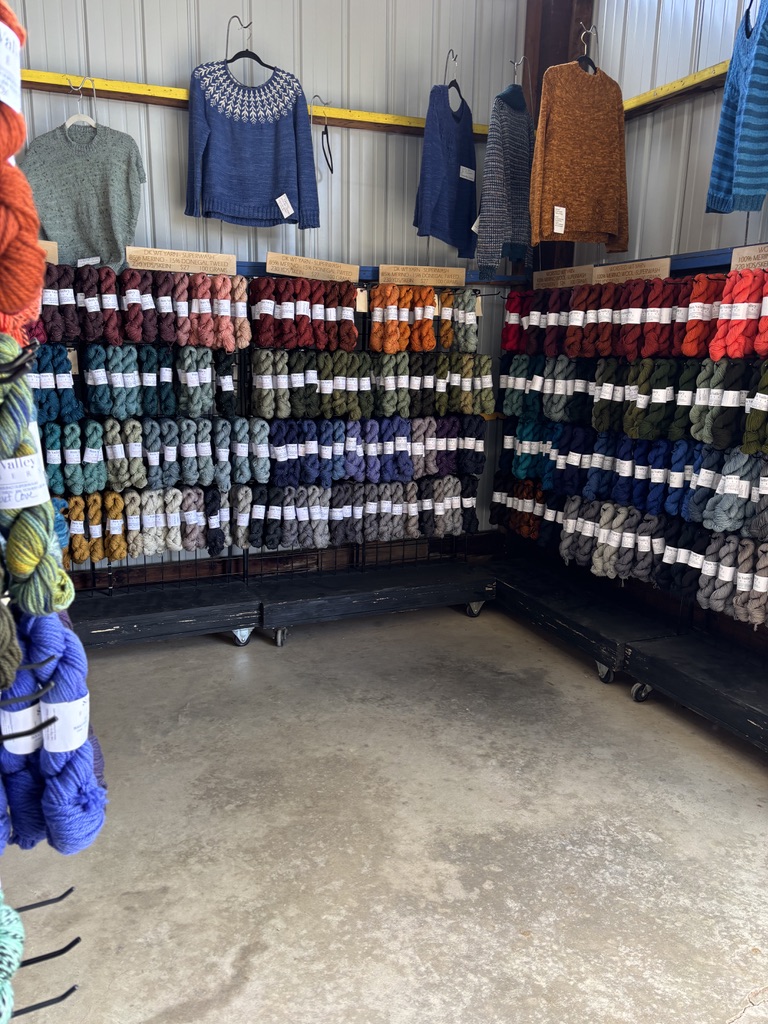
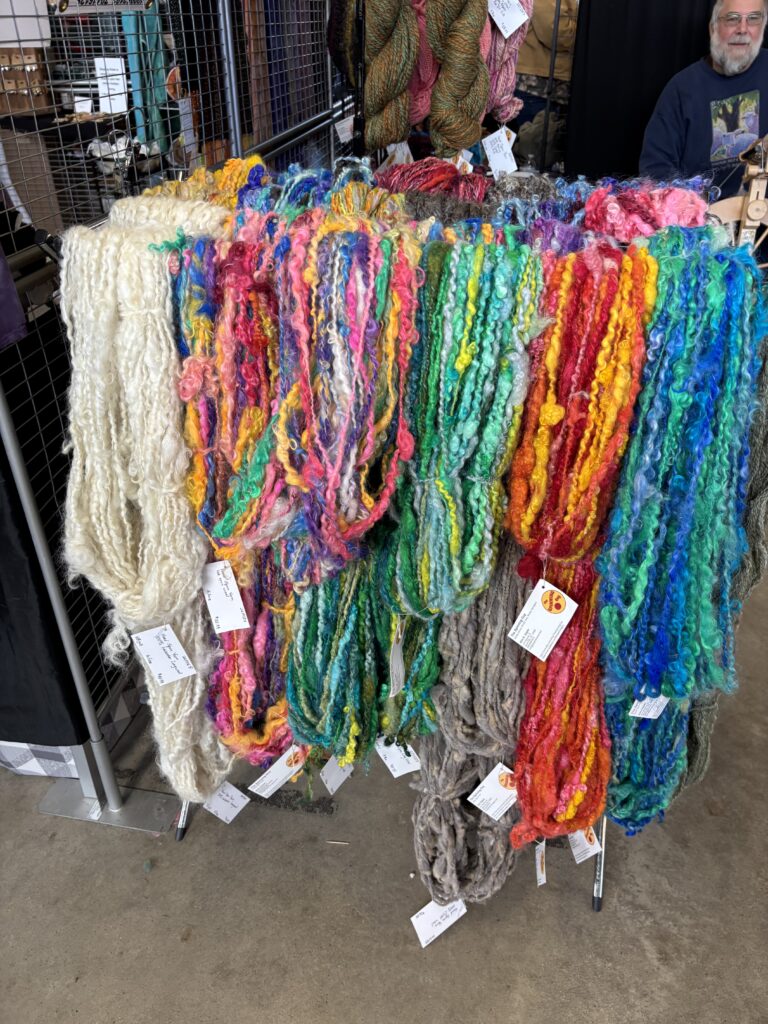
Look at all the colors! It is hard to choose just one!
Angora yarn
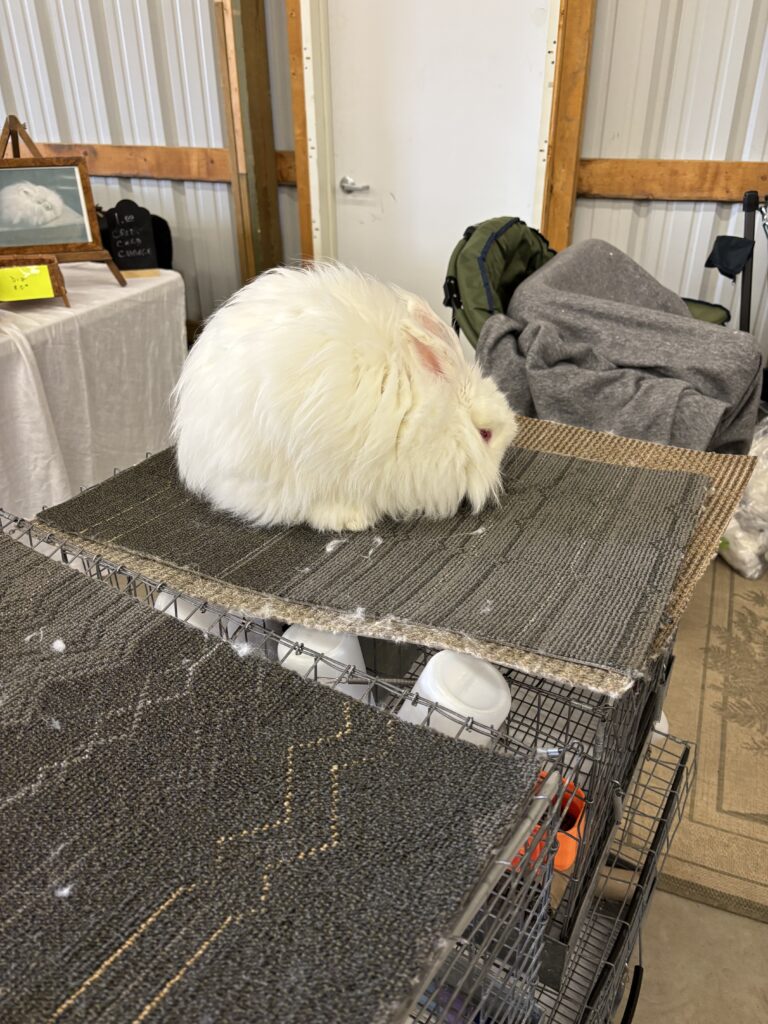
Angora yarn is made from the soft fibers of Angora rabbits. Their fur is gently gathered using fine combs or shears. The fur is known for its extraordinary warmth and soft texture. The fur is usually collected every couple of months.
The Angora fibers are cleaned, sorted and washed to remove dirt and contaminants. The cleaned fibers can be spun into yarn. This process can take several weeks. Finally, the yarn can be dyed and finished to make the yarn even more beautiful!
Sheep wool
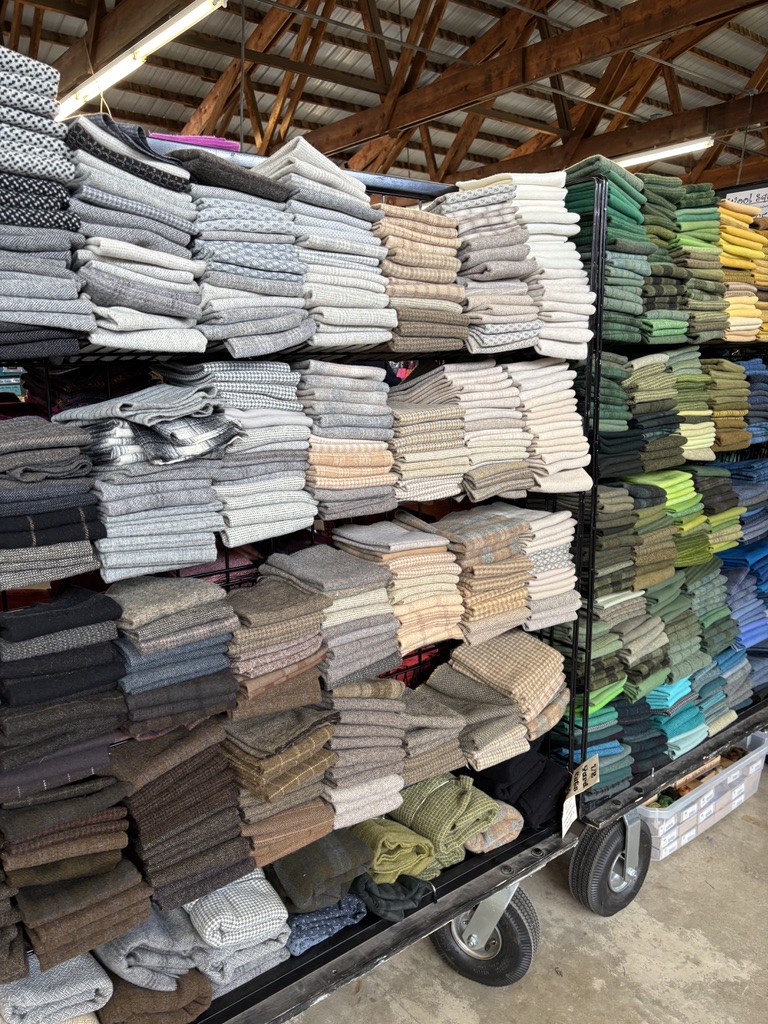
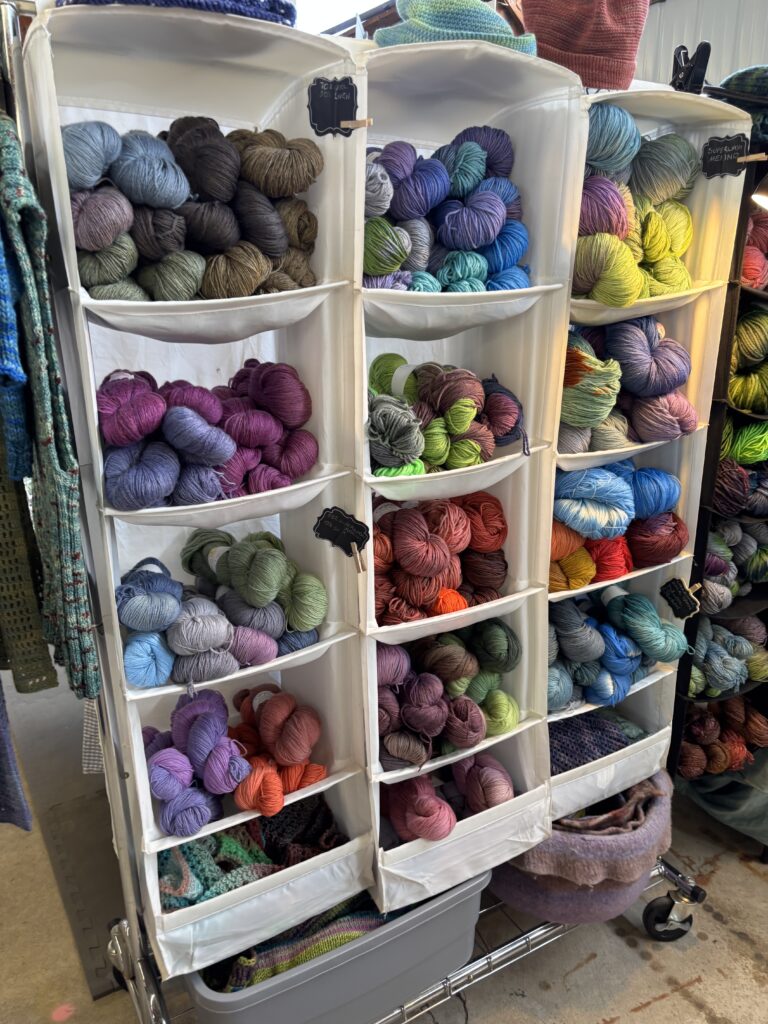
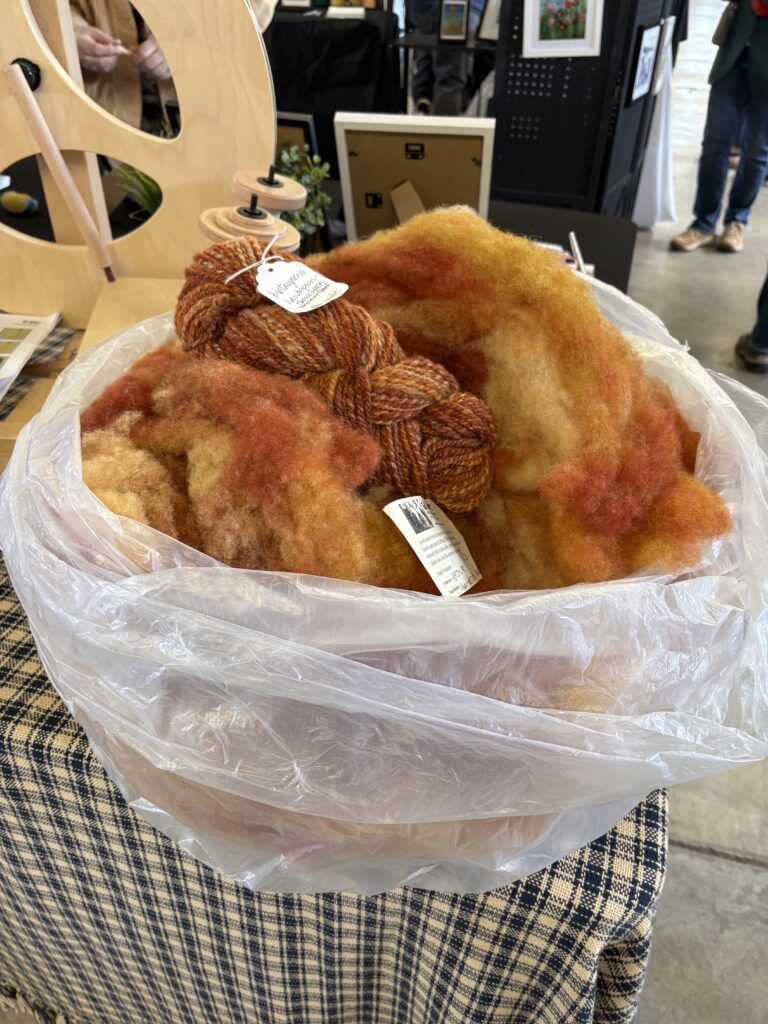
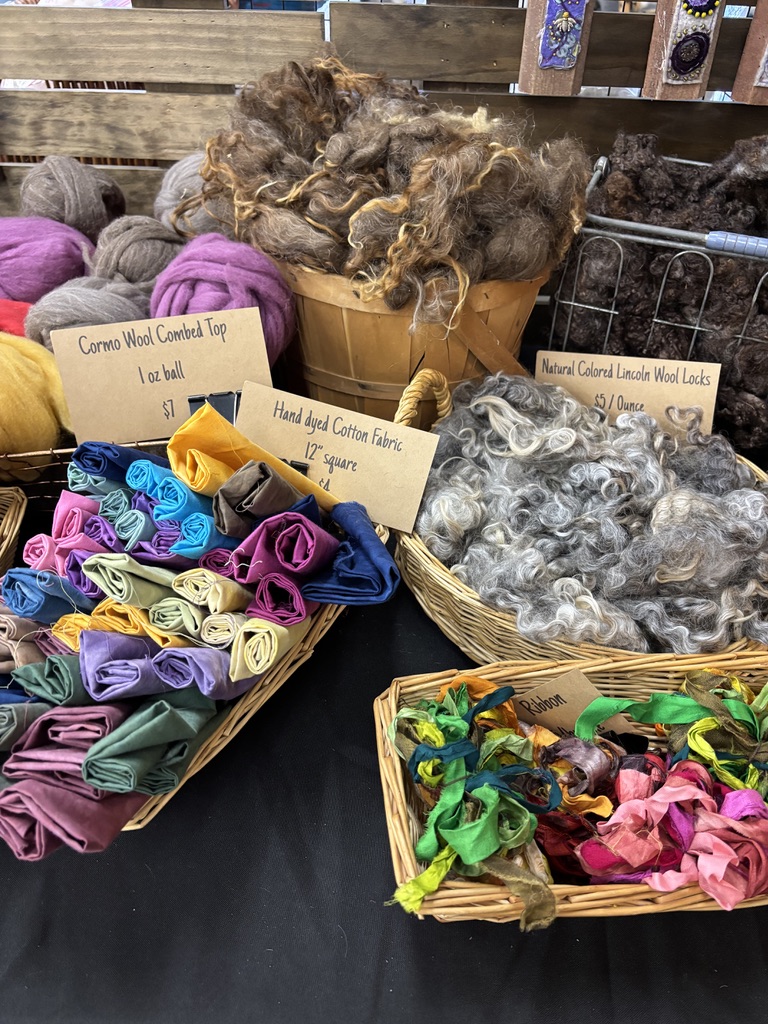
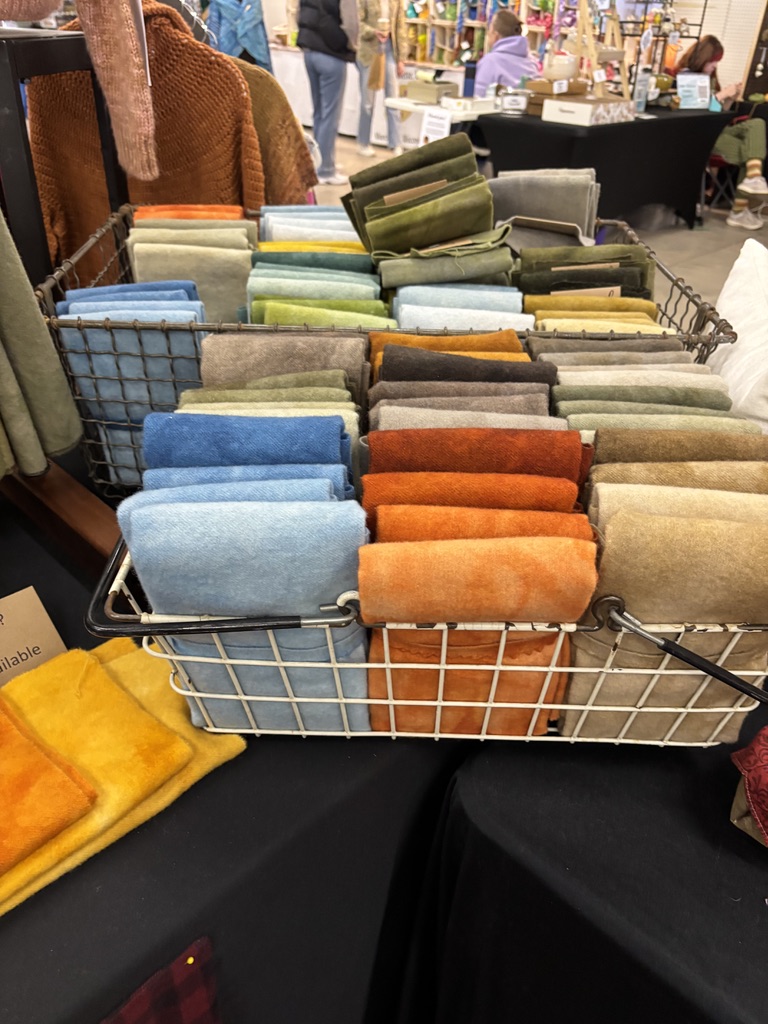
Sheep are sheared once a year to collect their wool. It is first sorted by quality. Next it is washed to remove dirt, grease and a sheep’s natural oils. It is separated and the fibers are put in order, so they all go in the same direction. Lastly, it is spun into yarn. It can also be woven into fabric. Look at all the colors of wool felt and yarn skeins.
Llama fiber
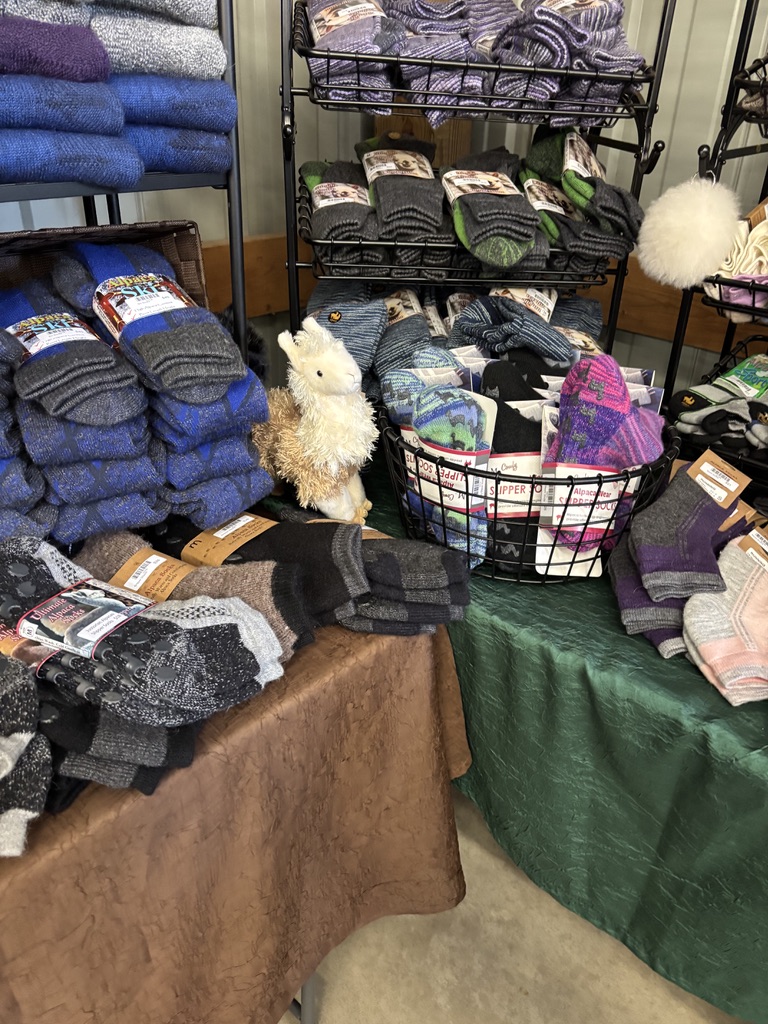
Llamas are shaved of their coat every two years to yield about 6-8 pounds of fiber per animal. This fiber is made up of a coarse outer guard hair and a soft undercoat. The raw fibers are cleaned of dirt and debris. Then, the fibers will be separated. Only the soft undercoat is used for spinning. The cleaned soft fibers are then aligned and prepared to be spun into yarn. Once spun, the yarn can be dyed.
Alpaca fibers
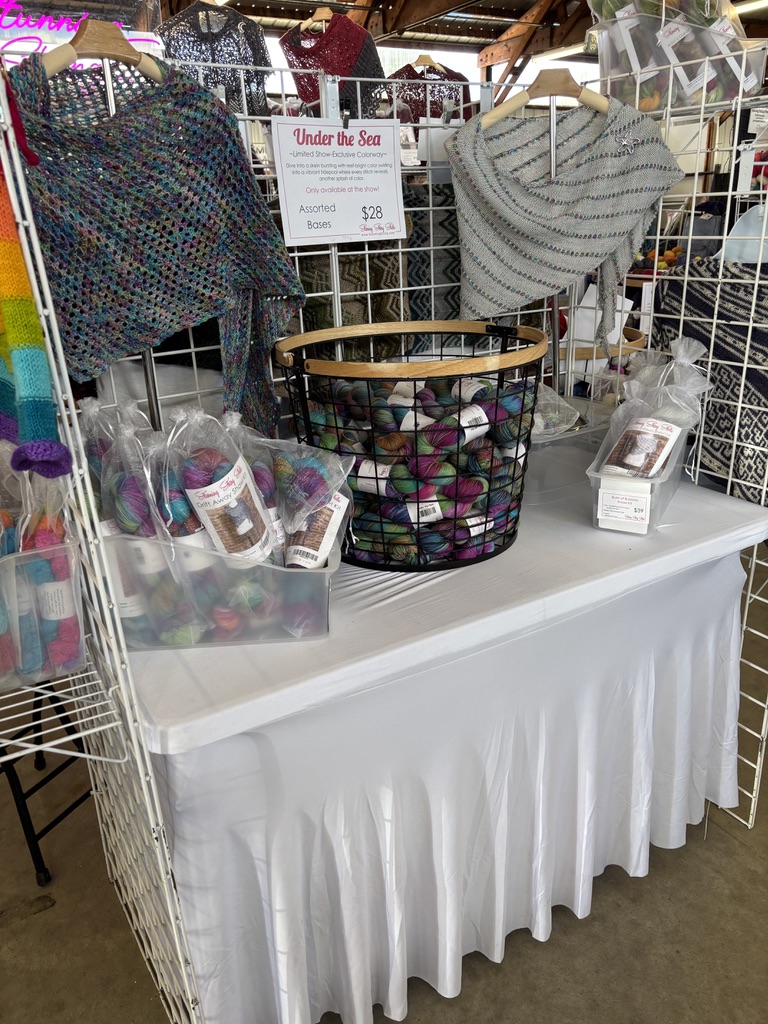
Alpaca fibers are also collected by shearing once a year. After taking off the fleece, it is washed and dried. Any coarse hair is removed.
As with other fibers, Alpaca fibers are aligned. This is the step where roving can be produced.
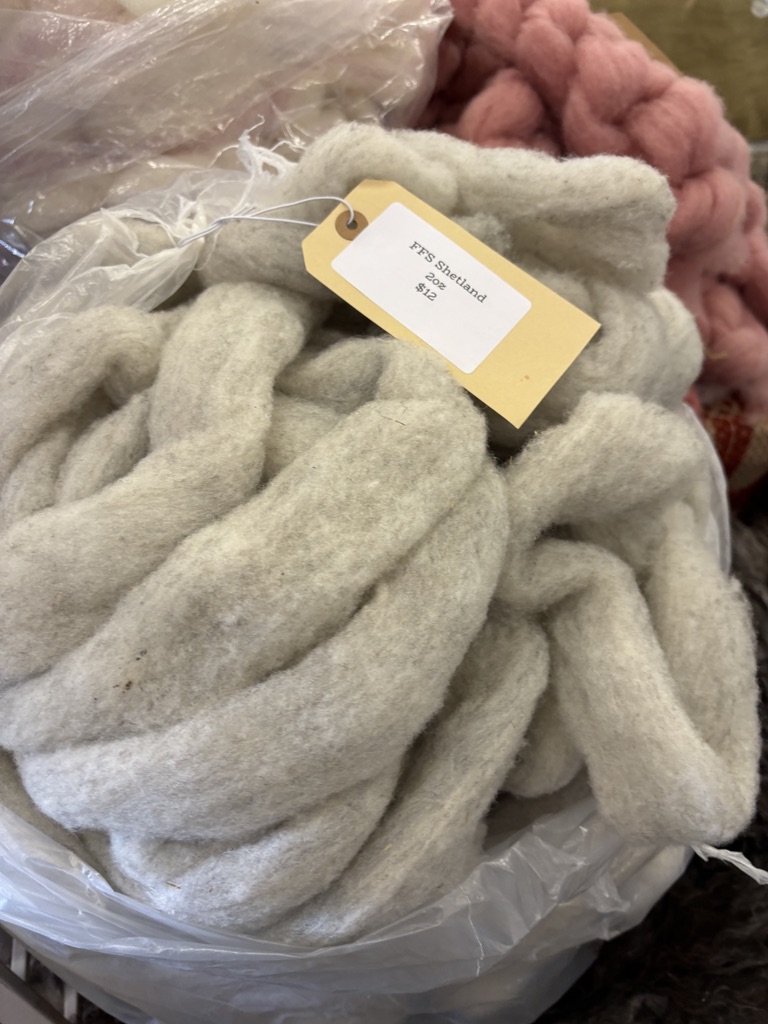
Roving is the long fluffy strand of arranged wool fibers that are prepared for spinning.
Lastly, the fibers are spun into yarn. Alpaca can also be dyed or conditioned to create color and texture.
Eco printing
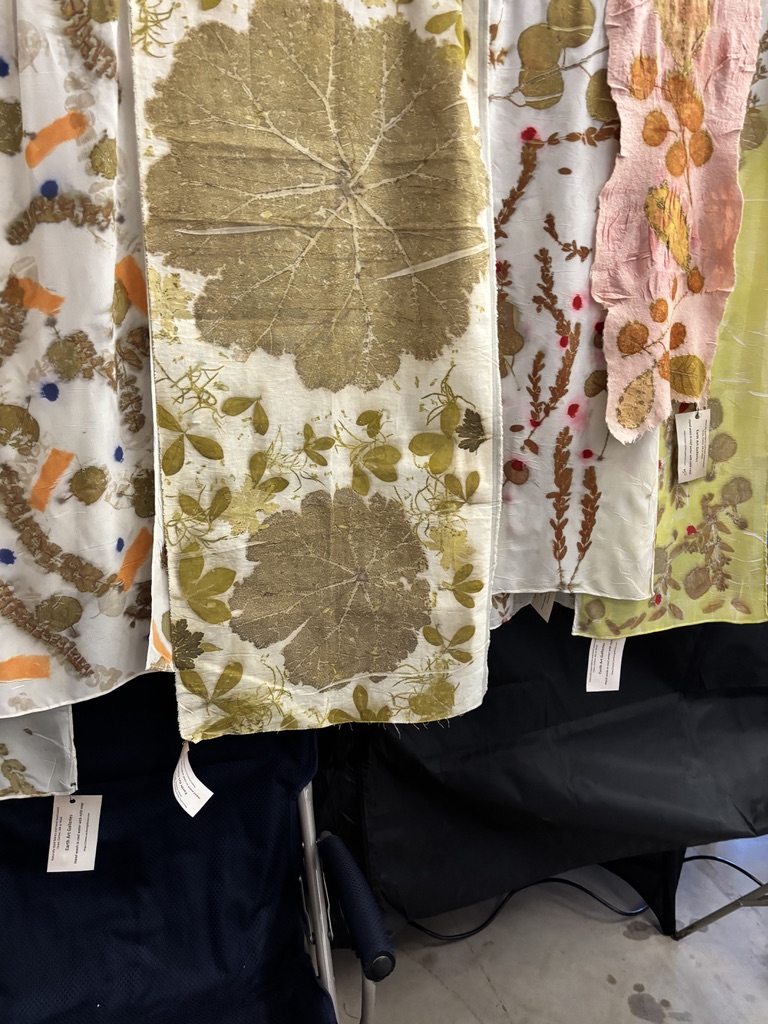
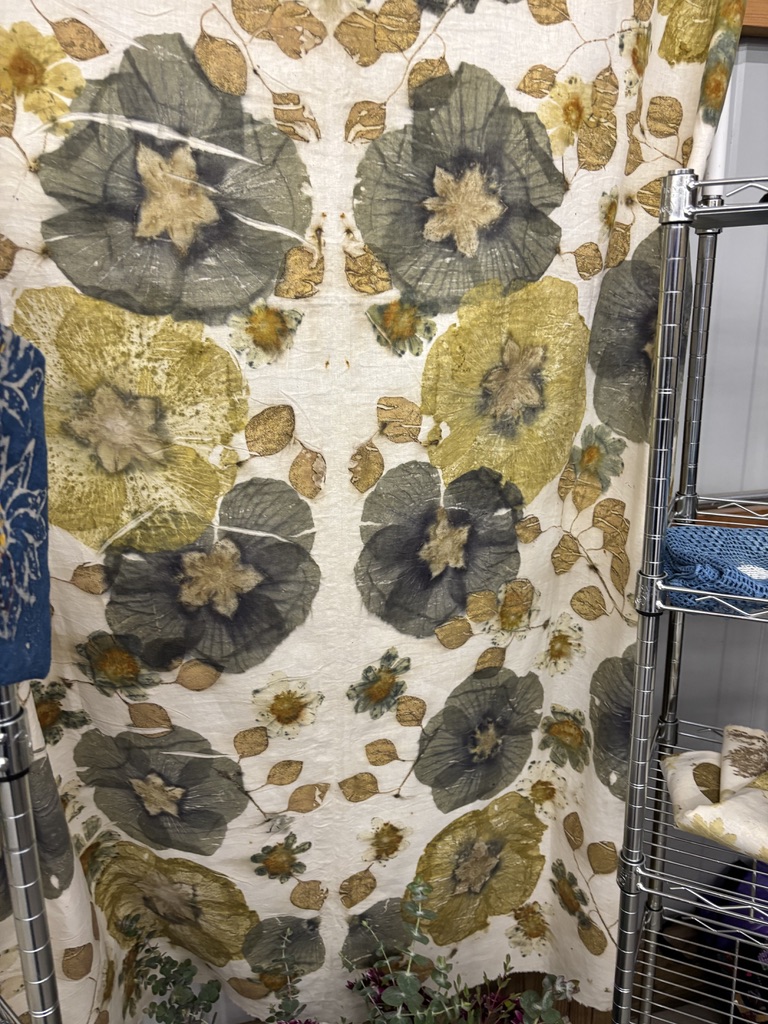
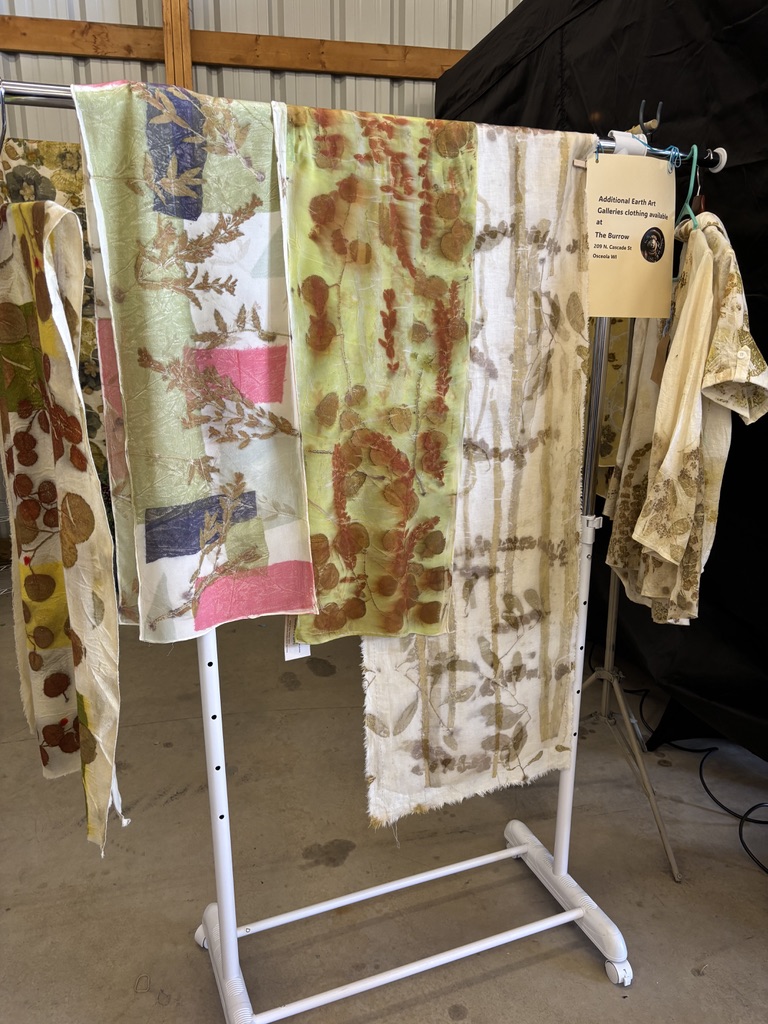
Eco printing is a method using plants, flowers and other organic materials found in nature to create patterns on fabric. This is a natural process that is environmentally friendly. Look at the beautiful results!
Fish leather
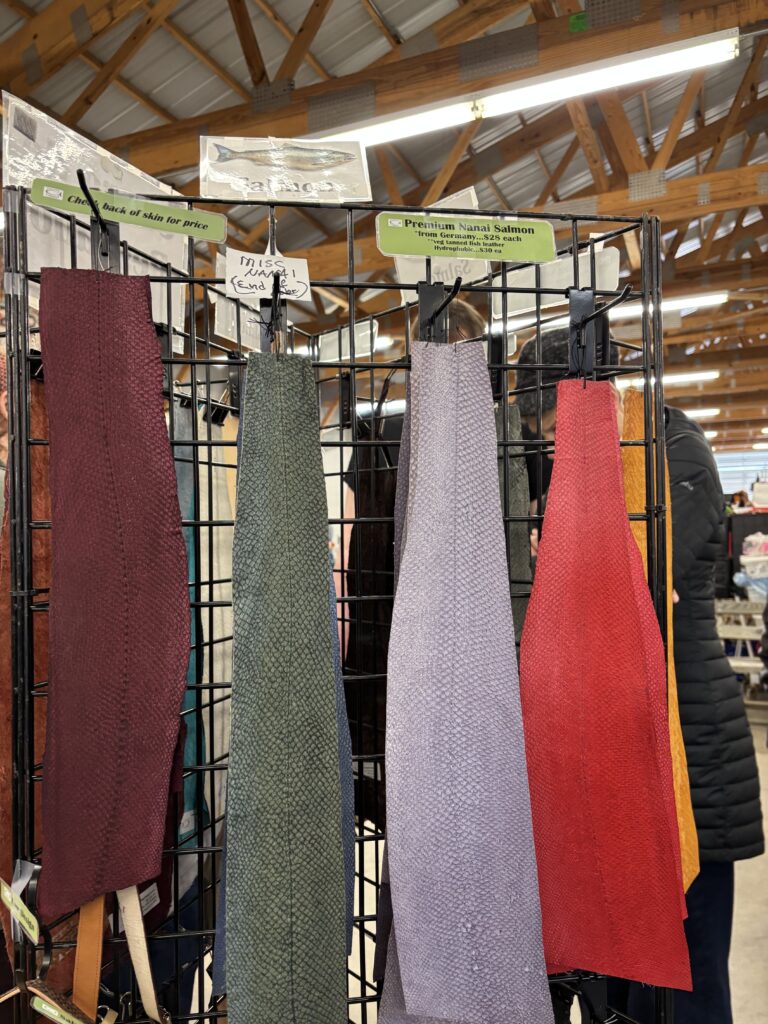
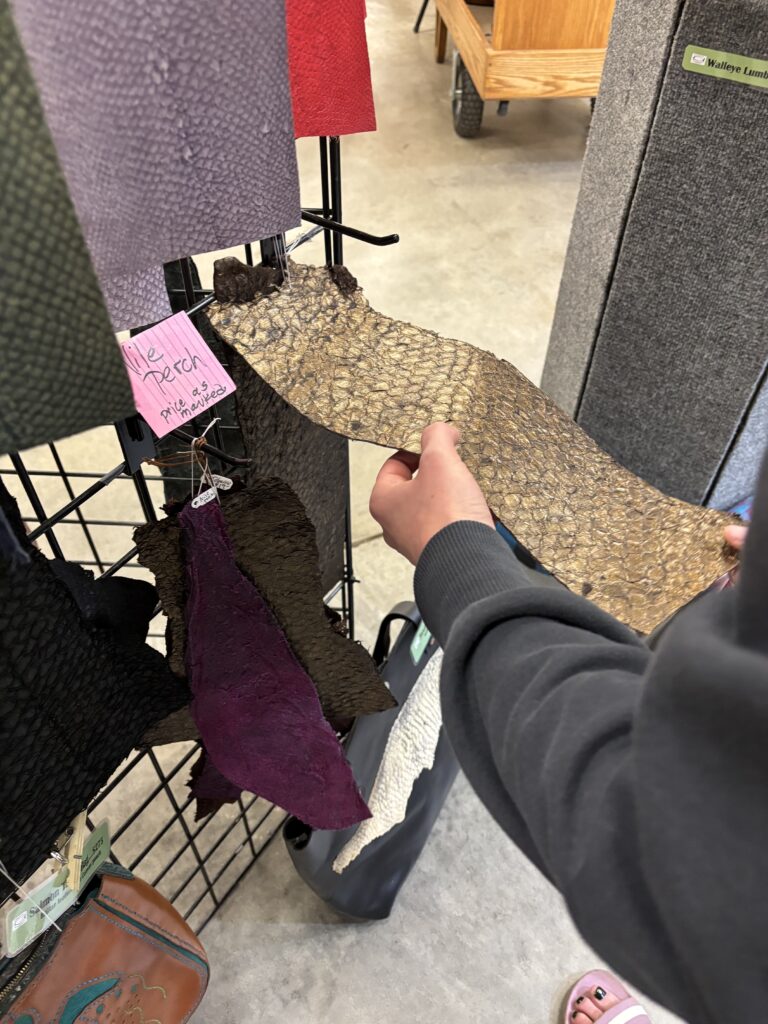
We have never seen this before. They are beautiful! Just not sure what I would make with one of these! Fish leather is fish skin prepared through the application of a special solution to make it durable and flexible. It is then allowed to dry and finally conditioned, dyed and polished. Salmon and tilapia are commonly used. It is considered a sustainable alternative to animal leather. It has a unique texture and natural scale pattern. This vendor made purses with them as part of the purse.
Time for a bite to eat
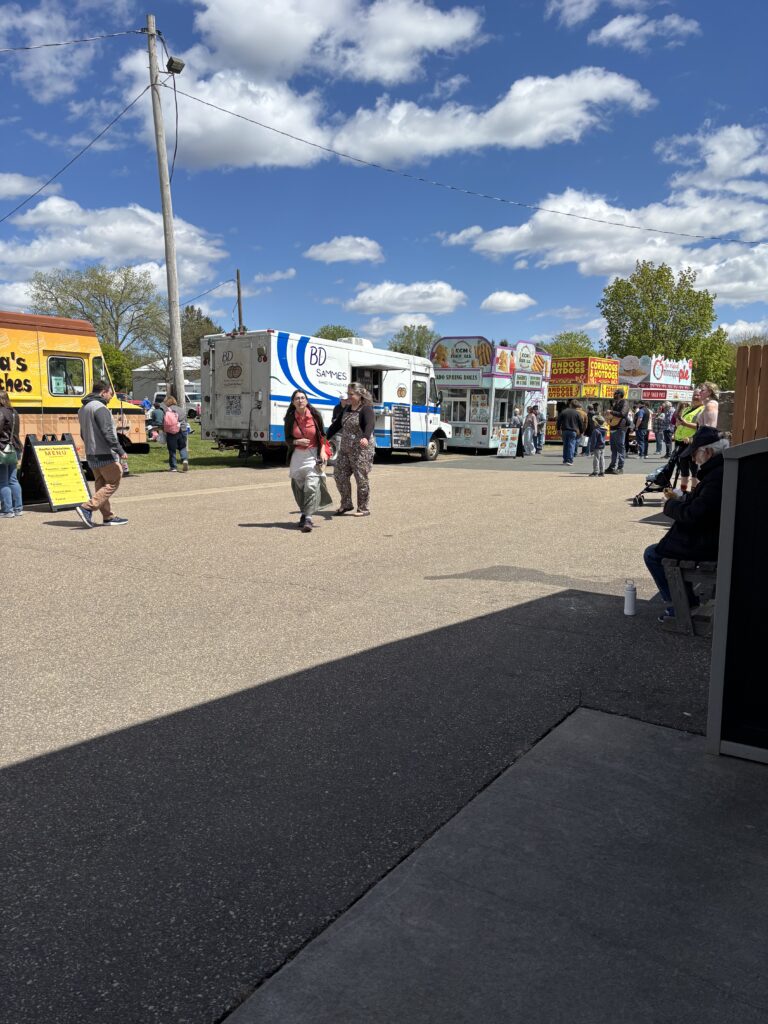
The Festival has food trucks, so you can sit and have a bite to eat!
Back to browsing
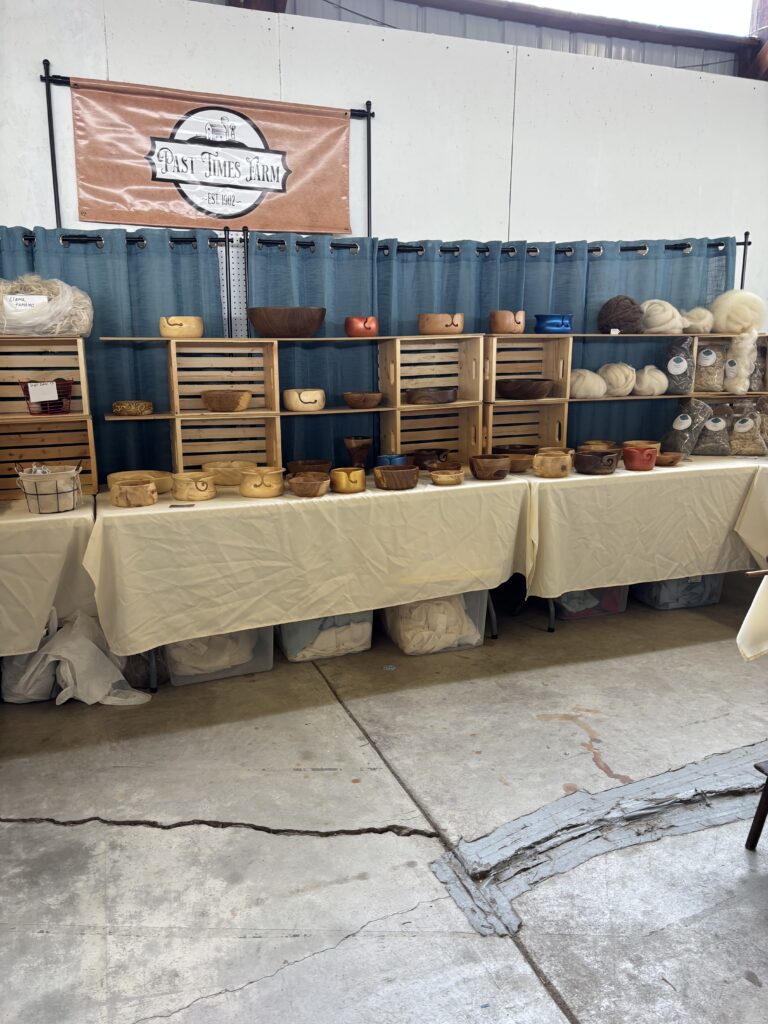
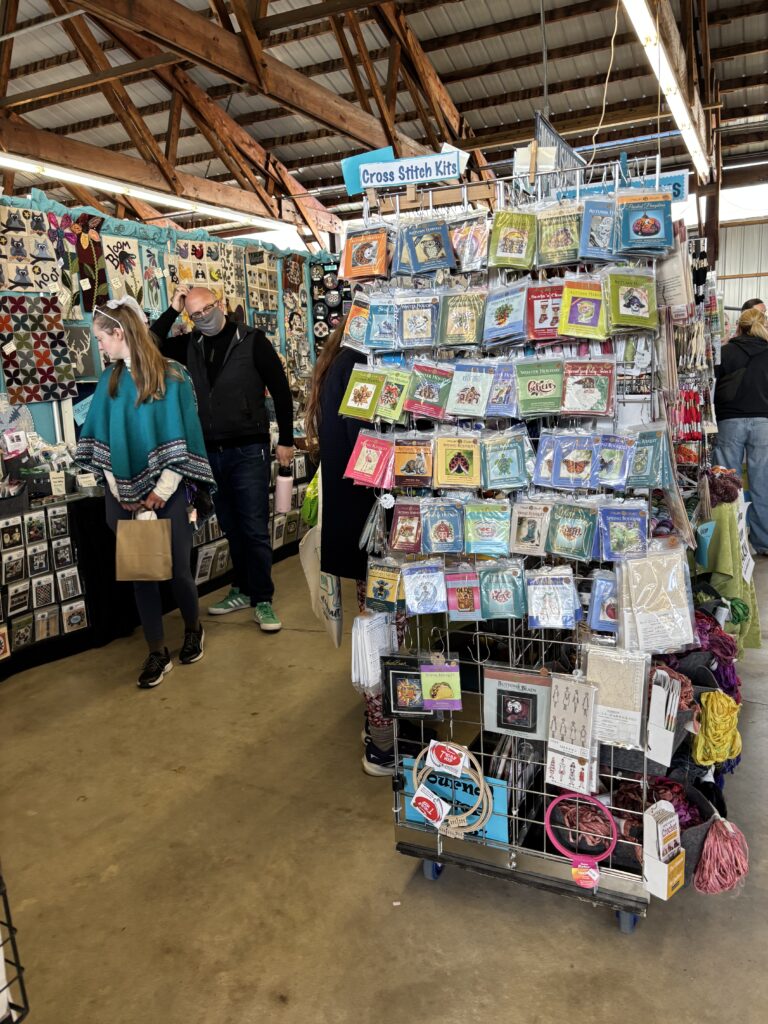
Arm chair festival sights
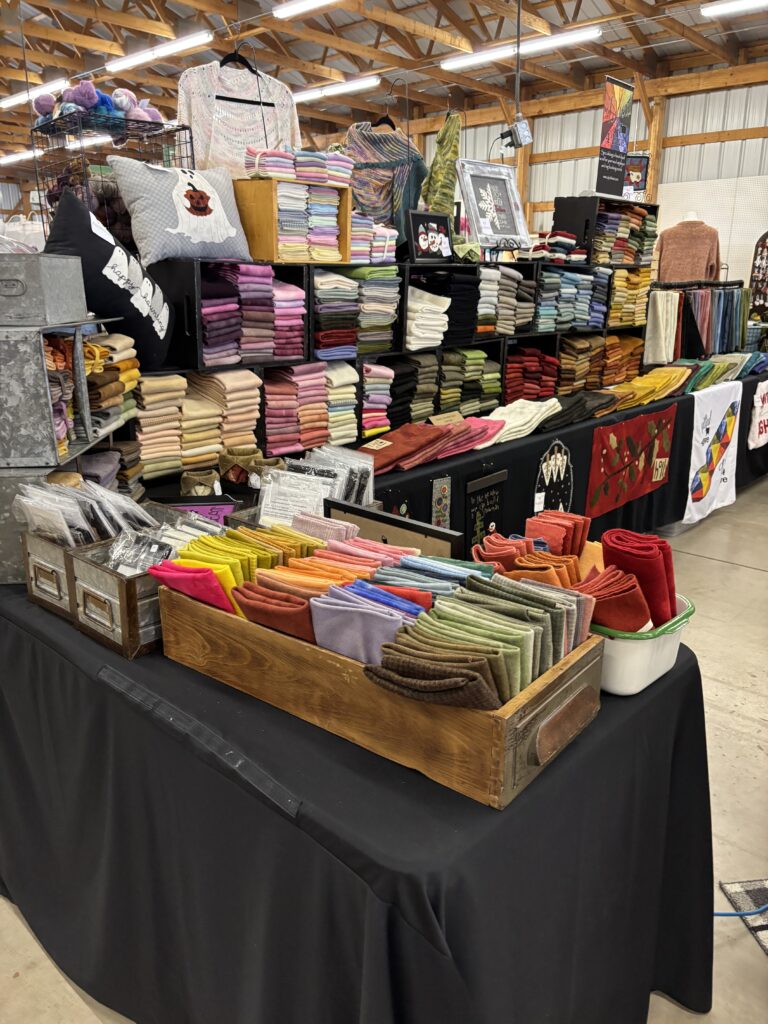
I hope you enjoyed having a look at what you can see at a Sheep and Wool Festival. And…they have animals in the barns to see, sheep shearing, demonstrations on needle felting, spinning fibers into yarn….
Until next time!
Kelly