September 9, 2025
It is important to be in tune with your dog, whether it’s their health, eating habits or recognizing fearful behavior. Reading the signals that your dog feels afraid can help you not only understand their fears, but help them feel safe.
There are several reasons a dog can show signs of fearful behavior. Some dogs are more likely to be a nervous breed.
Dog breeds prone to being nervous
- Toy Poodles
- Jack Russell Terrier
- Cavalier King Charles Spaniel
- Bichon Frise
- Miniature Schnauzer
- Shetland Sheepdog
- Lagotto Romagnolo
- Spanish Water Dog
- Soft Coated Wheaton Terrier
- Border Collie
- Australian Shepherd
- German Shorthaired Pointer
- Labrador Retriever
- German Shepherd
- Mixed breeds
What causes anxiety in dogs?
Separation anxiety is a common cause. This is distress caused by being left alone.
Improper or a lack of early socialization can cause a pup to grow into an anxious dog.
A traumatic experience can also lead to triggers that remind the dog of the unpleasant situation..
Dogs left in a shelter can cause anxiety and fearfulness.
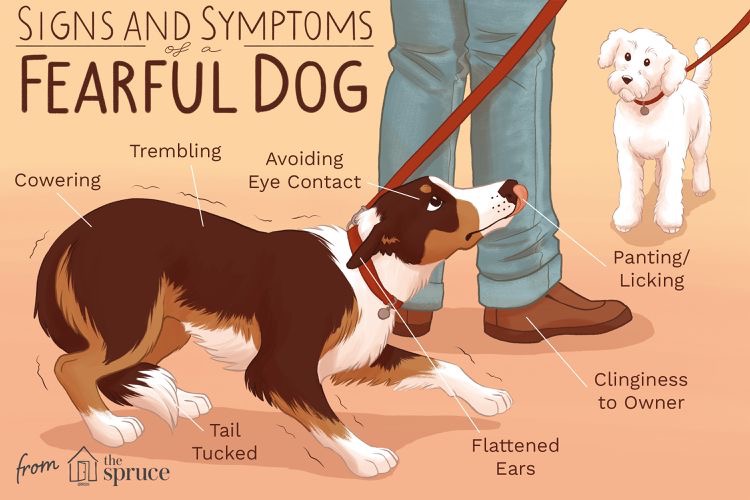
Our dog Graham is a rescue. He is a Cavalier King Charles Spaniel which predisposes him to being nervous. He was removed from a breeder who left him in a cage for the first 3 years of his life. While he finds being in a crate comforting, he becomes frightened around other dogs, kids yelling and crowds of people. His eyes get big, he may shake and cower trying to go in the opposite direction among other signs of fear.
Signals a dog may display
- Avoidance
- Lack of eye contact
- Tail tucked under their belly
- Slow movement or “freezing”
- Trembling
- Flattened body to the ground
- Panting or pacing
- Yawning
- Whining or barking
- Hiding
- Submissive peeing or for Graham pooping
We had a Shetland Sheepdog “Sheltie” that was picked on by the other dogs in his environment. The owners used a newspaper to swat the other dogs away. Poor Cody thought he was being scolded, so any time we picked up a newspaper or any paper he was flat out on the floor.
What you can do
- Give your dog space, don’t force them to do what makes them feel uncomfortable
- Don’t let others try to pressure the dog to interact
- Speak softly
- Use gentle body language- don’t put your hands on their head or neck
- Avoid direct eye contact
- Always keep your dog on a leash when outdoors to prevent them from running away
- Never punish them, this may increase their fear
- Avoid saying “Good dog” during these episodes so you aren’t reinforcing their anxiety, instead say “You’re okay”
When Graham is afraid, he will sit down and look at me. He is letting me know he wants to be picked up and held. This brings him comfort. When he feels safe, he will let me know when he wants to be put down.
Prevention
- Commit to early and continued positive socialization. Let them meet other dogs and people in a controlled setting. Starting at a young age is key to prevent anxiety. Expose them to new sounds, smells and situations.
- Always provide positive reinforcement.
- Build a relationship with your dog-taking an obedience class together is a great way to do that.
- Let your pup get used to their surroundings.
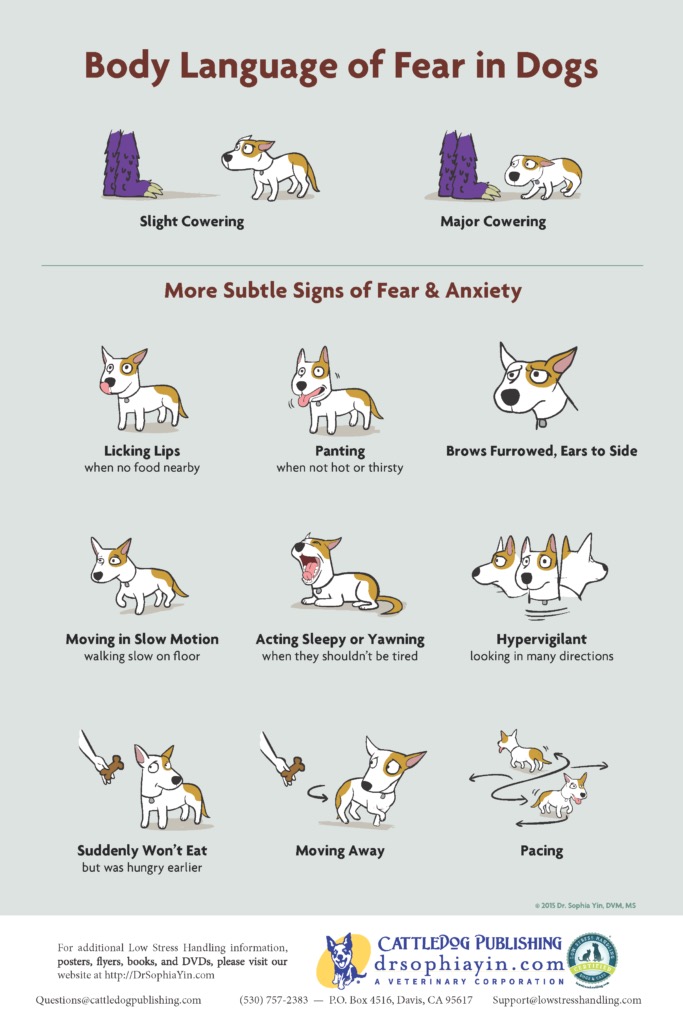
Watch their body language
- Never force an interaction, this can make the anxious reaction worse
- Pay attention to their body language.
- If they are afraid of fireworks or thunderstorms, be proactive. Find a quiet room for them to be safe in. Some dogs need medication to keep them relaxed and prevent property damage or injury. Talk to your vet if needed.
Use caution
A dog that is displaying fear may bite or show aggressive behavior to defend themself. Give them plenty of space if they are reacting this way.
For more information
https://www.akc.org/expert-advice/training/common-fears-and-phobias-in-dogs/
I hope this information is helpful if you are living with a fur baby that has anxiety.
Kelly